
Better Imaging Means Better Dental Care
Most dental problems are invisible before they become painful, and by the time a patient feels something, the issue has often been progressing for months. At Midjersey Smiles, Dr. Ruma Anand addresses that gap directly with dental technology that produces fast, detailed images of your teeth, roots, and jaw with a fraction of the radiation used by conventional film X-rays.
Whether you are coming in for a routine checkup or you have a specific concern that needs answers, digital imaging gives Dr. Anand a complete and accurate view of your oral health from the inside out, so nothing gets missed and no assumption goes unverified.
If you’re looking for a dentist in Old Bridge, NJ who combines thorough diagnostics with honest, patient-centered care, Midjersey Smiles is accepting new patients. Call us today at (732) 727-0895 to schedule your appointment with Dr. Anand.
How Are Digital X-rays Used For Preventative Care?
Prevention is central to Dr. Ruma Anand’s approach at Midjersey Smiles. Digital X-rays provide the care team with a comprehensive picture of your oral health, allowing them to catch issues before they become painful or costly.
Bitewing X-rays detect early-stage cavities between teeth or beneath the gumline that are invisible to the naked eye. Identifying decay at this stage often means a simple filling rather than a crown or root canal. For gum disease, X-rays reveal subtle bone loss that signals advancing periodontal disease. By comparing current images to previous ones, Dr. Anand can spot changes early, giving patients in Old Bridge, NJ, the chance to address problems before significant damage occurs.
Digital X-rays also monitor tooth development in children and teenagers, helping identify impacted teeth or crowding in time for early intervention. For adult patients, they track the condition of existing restorations like fillings, crowns, and implants to catch breakdowns before they escalate.
How Are Digital X-rays Used For Diagnostics?
When a patient arrives at Midjersey Smiles with pain, sensitivity, or swelling, digital X-rays are typically the first diagnostic step. They allow Dr. Ruma Anand to move from symptom to diagnosis quickly and accurately.
A periapical X-ray can reveal infected tooth pulp, an abscess at the root tip, or a deep crack, each pointing to a different treatment. For dental infections, the X-ray shows how far an abscess has spread and whether root canal therapy or extraction is the right path. For patients considering implants in Old Bridge, NJ, radiographs assess bone density and height at the placement site to support a safe and predictable outcome.
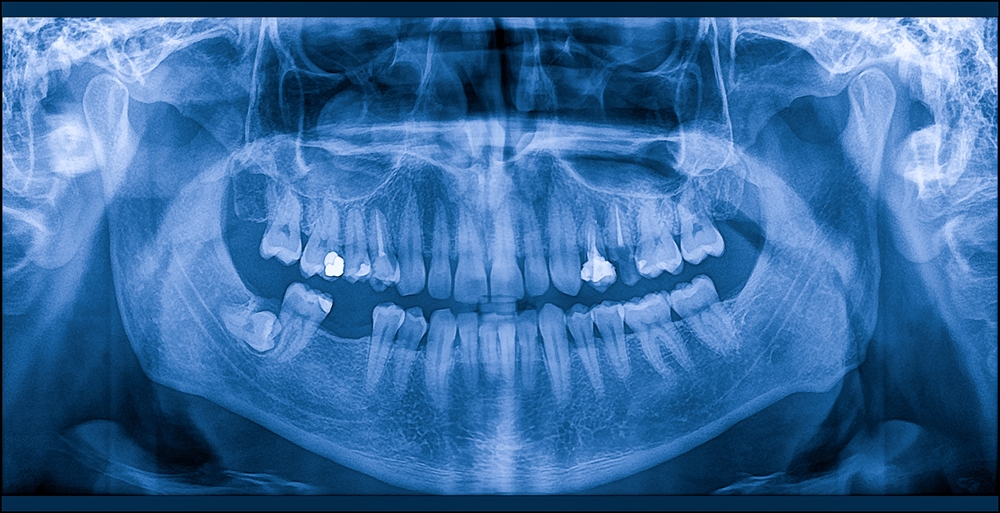
Panoramic X-rays help diagnose impacted wisdom teeth by showing their full position, angle, and proximity to nerves before any symptoms arise. They can also flag jaw-related concerns such as cysts, joint irregularities, or sinus issues that warrant further evaluation.
The Patient Experience at Midjersey Smiles
Dr. Ruma Anand walks patients through their X-ray findings in plain language, pointing out areas of concern directly on the screen. The process is fast and comfortable, with images appearing in seconds.
All images are stored digitally and compared at future visits, creating a clear picture of your oral health over time. Digital X-rays use up to 80 percent less radiation than conventional film, and lead aprons with thyroid collars are used as a standard precaution.
Precision Imaging, Personal Care
At Midjersey Smiles, Dr. Ruma Anand uses digital X-ray imaging to find what a visual exam alone cannot — bone changes, hidden decay, and structural concerns that, left unaddressed, tend to become far more complicated and costly over time.
Patients from Old Bridge, Sayreville, East Brunswick, and Woodbridge trust Dr. Anand to bring that level of diagnostic clarity to their care. If you have been relying on the absence of pain as a sign that everything is fine, digital imaging may tell a very different story. Call Midjersey Smiles at (732) 727-0895 to schedule an appointment with our Old Bridge dentist.