Dental Care That Feels Different in Old Bridge, NJ
Walking into a dental office shouldn’t come with a sense of dread, yet for many patients, that’s exactly how a dental impression appointment used to feel. Dr. Ruma Anand and the team at Midjersey Smiles have built a practice around a simple idea: care should feel calm, personal, and easy to trust.
Families throughout Old Bridge, NJ come to Midjersey Smiles not just for treatment, but for a team that listens, explains each step, and makes even the smallest details of a visit more comfortable. Digital impressions are one part of that promise, replacing outdated trays and messy materials with a quick, gentle scan that respects both your time and your comfort. If you’re searching for a dentist in Old Bridge, NJ, who puts your experience first, call Midjersey Smiles at (732) 727-0895 to schedule your dental visit today.
When Do We Need To Take Dental Impressions?
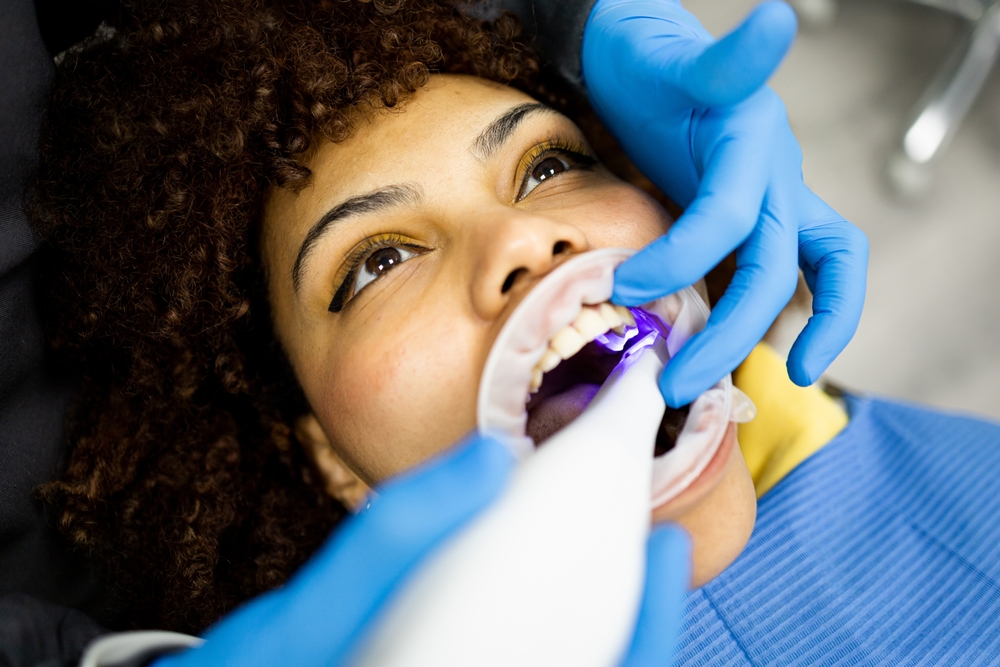
Dental impressions are not reserved for one single type of visit. They come up across nearly every stage of dental care, from cosmetic work to everyday restorative treatment. Dr. Ruma Anand and the team at Midjersey Smiles rely on impressions whenever a precise physical model of a patient’s teeth is needed to design something that has to fit correctly.
Some of the most common reasons a patient might need a dental impression include:
- Crowns and bridges — Before a lab can fabricate a crown or bridge, they need an exact map of the prepared tooth and the surrounding teeth so the final piece sits flush and bites evenly.
- Clear aligners and orthodontic retainers — Invisalign trays and retainers are built from a precise scan of the current tooth position, then adjusted in stages as teeth shift.
- Dentures and partial dentures — Full or partial dentures depend heavily on an accurate impression of the gums and remaining teeth to avoid slipping or rubbing.
- Nightguards and sports guards — Protective appliances need to match the contours of a patient’s bite exactly, or they won’t stay in place.
- Dental implants — Impressions help plan implant placement and design the crown or bridge that will eventually sit on top of it.
- Veneers — Cosmetic cases often start with a mock-up impression so the patient and dentist can preview the planned changes before any enamel is touched.
Patients in Old Bridge, NJ come to Midjersey Smiles for all of these reasons, and in almost every case, the visit begins with capturing a reliable, detailed impression. The quality of that first step has a direct effect on how well the final restoration performs, which is why Dr. Ruma Anand puts real emphasis on getting it right from the start.
What Makes Digital Impressions Superior to Traditional Dental Impressions?
Traditional impressions use a putty-like material loaded into a metal or plastic tray, pressed against the teeth, and held in place for several minutes while it hardens. It works, but it comes with real downsides: a strong gag reflex for many patients, messy cleanup, and a margin for human error if the material shifts before it sets. Digital impressions, captured with a small handheld intraoral scanner, address nearly every one of these issues.
- Comfort. There’s no tray, no goopy material, and no waiting around with your mouth held open in an awkward position. The scanner simply glides over the teeth, which is a welcome change for patients who have avoided dental work in the past because of gag reflex issues.
- Speed. A full scan of the upper and lower arches typically takes just a few minutes. Traditional impressions often need to be redone if the material sets unevenly or shifts, adding time to the appointment. Digital scans can be reviewed instantly on a monitor, and any area that needs a second pass can be rescanned on the spot.
- Accuracy. Digital scanners capture thousands of data points per second, building a three-dimensional model that reflects the true shape of the teeth and gums down to fine detail. This level of precision reduces the chance of a crown, aligner, or bridge coming back from the lab with a fit issue.
- No reshoots from material shrinkage. Physical impression material can shrink or distort slightly as it sets or during shipping to a lab. A digital file doesn’t degrade, warp, or lose shape between the chair and the lab that fabricates the final restoration.
- Better patient communication. Because the scan appears on screen right away, Dr. Ruma Anand can walk patients through their own teeth in real time, pointing out wear patterns, spacing, or areas of concern that are easy to see on a 3D model but harder to explain with a physical mold.
- Environmentally lighter. Digital files replace trays, alginate or polyvinyl siloxane material, and the shipping boxes traditionally used to send physical molds to outside labs.
For patients researching a dentist in Old Bridge, NJ who want modern, comfortable care without sacrificing precision, digital impressions represent one of the clearest upgrades a dental office can offer.
Digital Impression Process
Patients often ask what to expect the first time they hear “we’re going to scan your teeth” instead of “we’re going to take an impression.” The process at Midjersey Smiles is straightforward and typically fits into a normal appointment without adding much time.
- Step 1: A quick chair-side explanation. Before the scanning wand ever touches your mouth, Dr. Ruma Anand or a member of the team explains what the scan is for, whether that’s a crown, an aligner series, or a nightguard, and what the resulting model will be used for.
- Step 2: Scanning the teeth and gums. A small wand, roughly the size of an electric toothbrush, is moved slowly along the biting surfaces, the outer surfaces, and the inner surfaces of each tooth. There’s no material in the mouth and no tray to bite down on, so patients can breathe and swallow normally throughout.
- Step 3: Real-time 3D model building. As the wand moves, software stitches each pass into a growing 3D model, visible on a nearby monitor. Any gaps in coverage show up immediately, so the scanner can go back over that specific spot rather than starting the whole scan over.
- Step 4: Bite registration. Once the upper and lower arches are captured, patients bite down normally so the scanner can record how the teeth meet. This bite data is what allows a lab to build a crown or appliance that fits the opposing teeth correctly.
- Step 5: Review and digital transmission. The finished model is reviewed on screen, and Dr. Ruma Anand can rotate, zoom, and measure directly on the file to confirm coverage and accuracy. From there, the file is sent electronically to the lab producing the restoration or appliance, cutting out shipping time entirely.
- Step 6: Fabrication and fitting. Depending on the restoration, some cases can be milled the same day in-office, while others are sent out and returned within one to two weeks. Either way, the digital file stays available for reference if any adjustment is needed later.
For most patients, the entire scanning portion takes well under ten minutes, a fraction of the time older impression methods required, and without the discomfort that kept some people from scheduling treatment in the past.
Frequently Asked Questions
No. A digital impression captures the visible surface shape of teeth and gums, while X-rays show what’s happening below the gumline, including roots, bone, and areas of decay between teeth. Dr. Ruma Anand uses both together to build a full picture of a patient’s oral health.
In most cases, yes. Insurance typically covers the procedure the impression supports, such as a crown or orthodontic treatment, rather than billing separately for the impression method itself. The team at Midjersey Smiles can review specific plan details before treatment begins.
Yes, and many kids actually find the scanning wand less intimidating than a tray full of impression material. Because there’s nothing to hold in the mouth or gag on, digital scanning tends to be an easier experience for younger patients.
Since the digital file is stored electronically, it can be pulled up again without asking a patient to come in for a brand-new full impression in many situations. This is particularly useful for monitoring orthodontic progress or comparing wear over time.
Your Smile Deserves Modern, Gentle Dental Care in Old Bridge, NJ
If old, uncomfortable dental impressions have kept you from getting the care you need, it doesn’t have to be that way anymore. Dr. Ruma Anand and the team at Midjersey Smiles have helped countless families across Old Bridge, NJ trade in gag-inducing trays for a gentle, accurate digital scan that takes just minutes. Every patient deserves a dental visit that feels calm instead of stressful, and this is one more way Midjersey Smiles is bringing real comfort back to routine care.
If you’ve been putting off a crown, a retainer, or a nightguard because of what impressions used to feel like, now is the time to call. Reach the Midjersey Smiles team in Old Bridge, NJ, at (732) 727-0895 and see for yourself why so many neighbors trust Dr. Ruma Anand with their smiles.